Everything in Scam With Your Friends hangs off one line from the official site: hit your daily quota or GET FIRED. The quota is not one mechanic among many. It is the reason the calls happen, the reason the office is chaotic, and the punchline of every session.
How the quota works
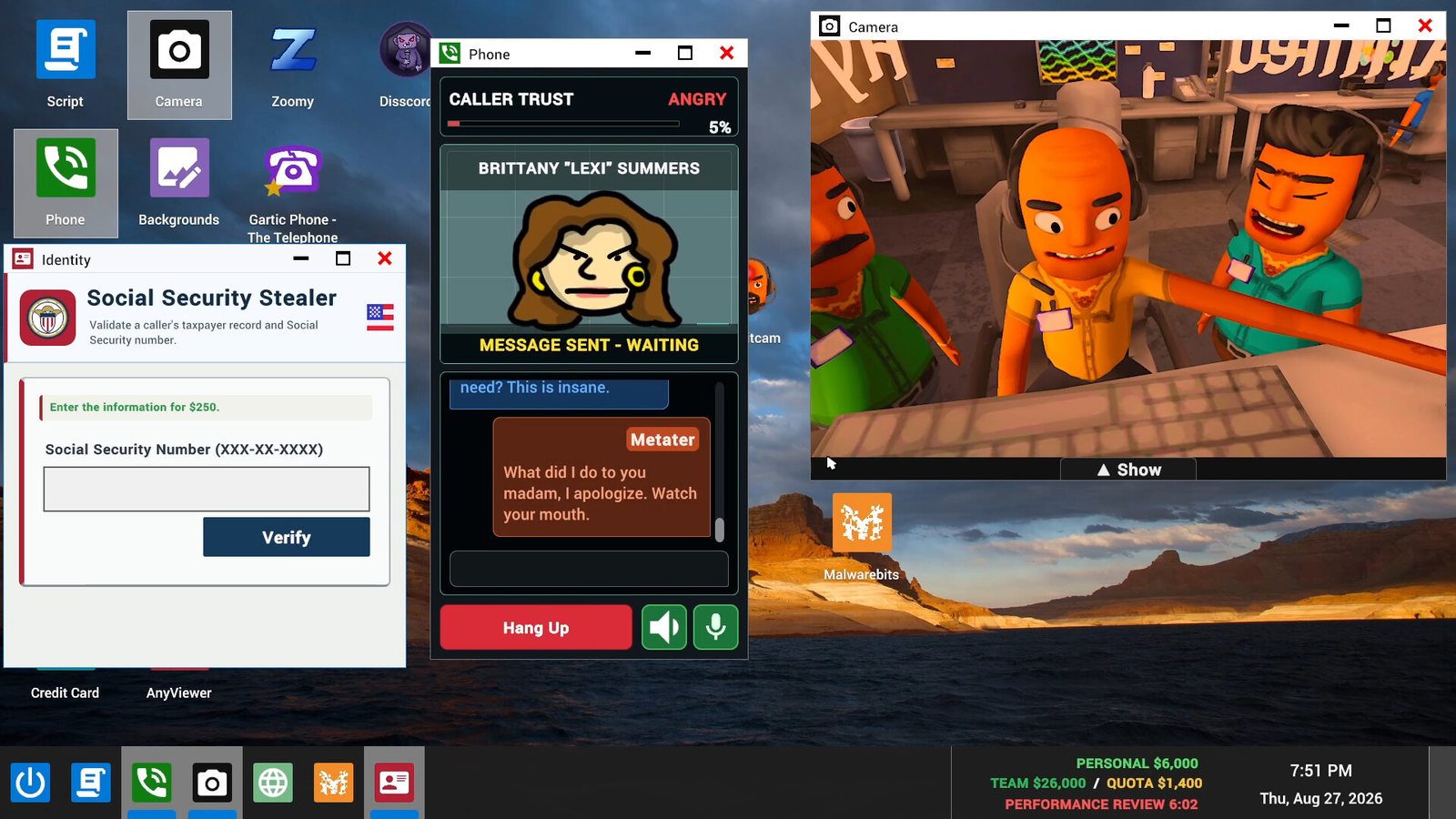
- The lobby earns money together. The store HUD shows personal and team earnings side by side with the quota next to them, so you always know whether the floor is ahead or behind.
- A performance meter tracks the shift as it goes, and the HUD also carries a countdown to the next performance review.
- The official site's own section title for this is "The quota won't hit itself", which is as close as the developer gets to strategy advice.
The performance reviews
The official trailer description says you must "survive your rageaholic boss's performance reviews". The boss is the antagonist of the loop: the reviews arrive on a timer shown in the HUD, and missing the quota ends the day badly. The store page describes the boss as ruthless as well as rageaholic, and the whole tone of the game is that the firing is comic rather than punitive: you are playing a comedy about terrible jobs, not a simulation of one.
The end-of-day report
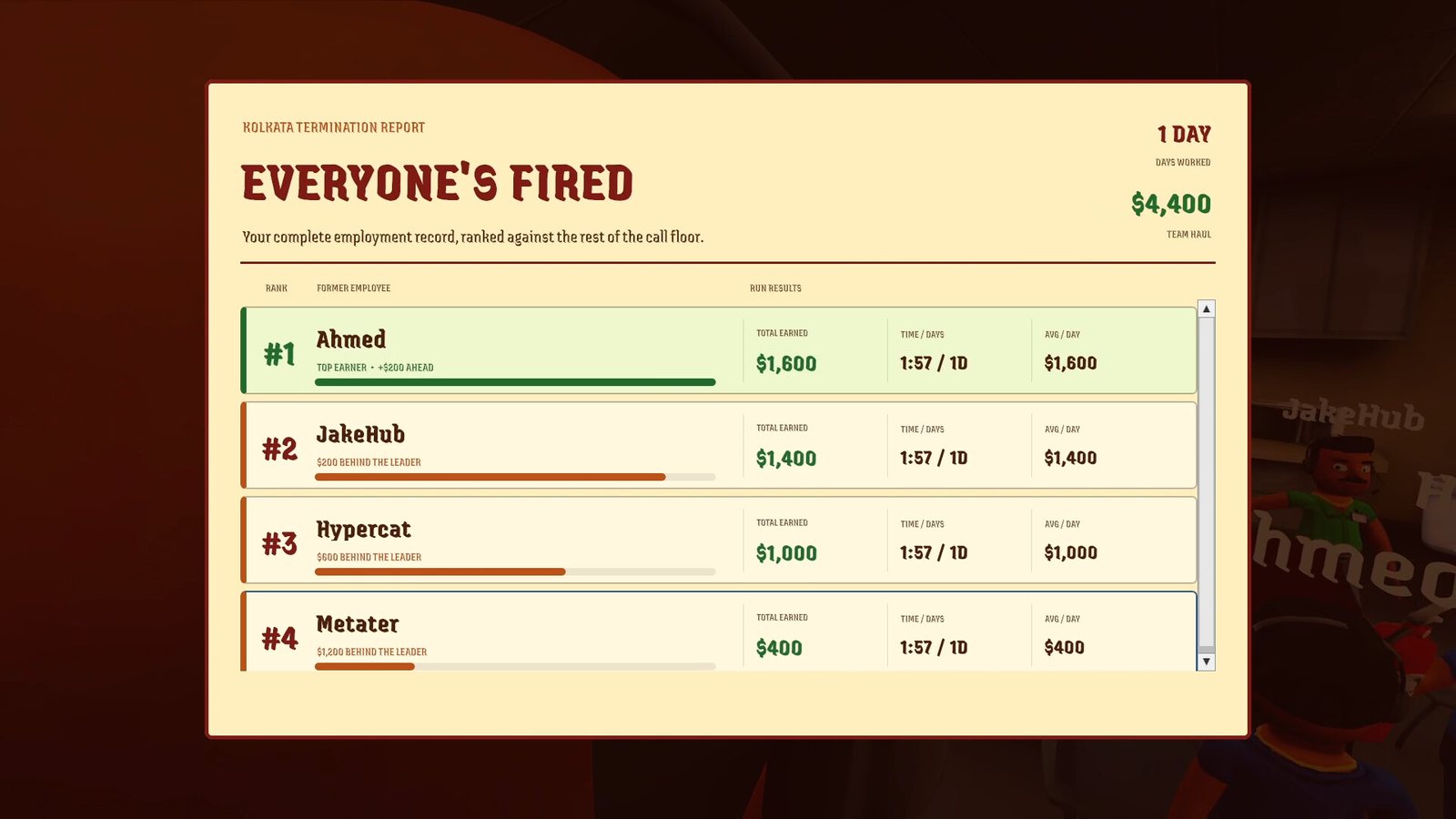
Community playtest footage shows what happens after a firing: a termination report that ranks the whole floor by total earned, with each player's earnings, time worked and average per day listed against each other. That report screen comes from community recordings, not from official copy, so treat its exact fields as observed rather than documented. It matches the multiplayer pitch exactly: the game is at its best when the floor is full of people to compare against.
How you actually hit the quota
The loop that feeds the quota is covered step by step on the how to play page: take calls, work the day's scam, get into the victim's computer, and keep the trust meter moving. Community footage adds the levers players pull when the floor is behind: claiming the day's scam type for its abilities, and spending earnings in the items shop on tools for the next shift. Both are labelled community-sourced, because the developer has not documented the shop. Hazards eat call time faster than anything else on this list, which is why the hazards page is the natural next read after this one.